AI Portfolio
Digital Rebel Website
Production site built with AI orchestration
The Challenge
Packaging 20 years into a single website
How do you turn 20 years of strategy, business development, service design, and product leadership into one website that makes sense? Especially when that experience cuts across half a dozen different domains.
That was the real challenge. Not the technology, not the code. The hard part was figuring out who I am professionally, what I actually want to do, and saying it clearly enough that someone would want to buy it.
At Nokia I worked on mobile products, but also on business concepts that did not exist yet. P2P mobile payments for consumers, agent networks, and point-of-sale devices. A logistics platform where I modeled the entire business and partner network end to end. All everyday stuff now, but none of it existed in the early 2000s. From there, financial sector transformations, startup concepts, enterprise operating models, and CX leadership across multiple teams.
That range should be an asset, but when you sit down to write a homepage headline, it mostly just makes things harder. I started building in late autumn and hit a total identity crisis. The offering and core message went through at least three complete rewrites before a single design decision made sense.
The Identity Crisis
Three pivots before finding the core
I jumped into Claude Code before I had a design direction. The result was functional but generic. No soul, no point of view.
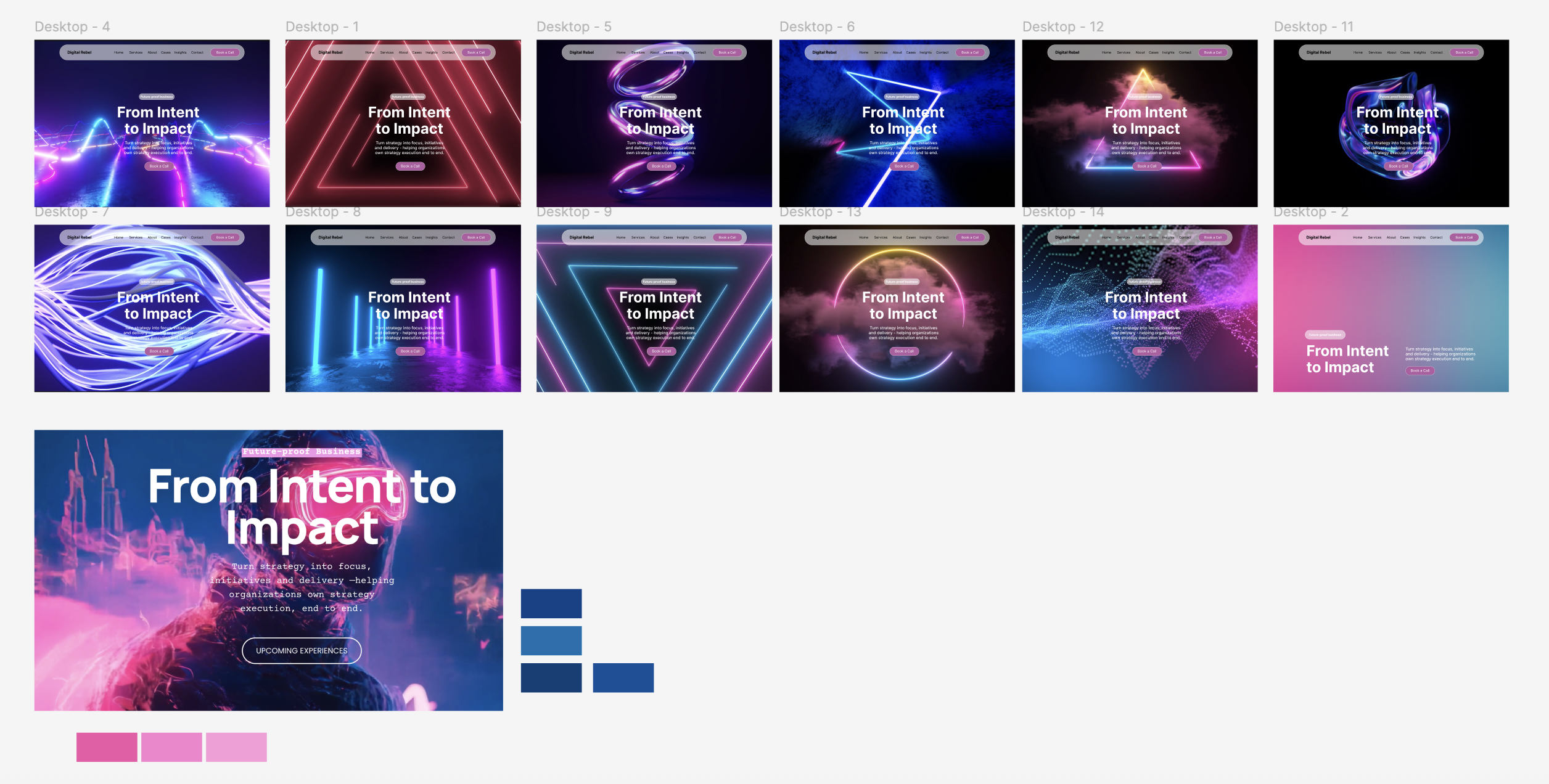
Figma helped me find the visual identity. Not pixel-perfect mockups or component specs, just the feeling, the tone, what the site should look like. Having a design background made that step fast, but skipping it entirely had cost me weeks of going in circles.
The real shift was accepting that a wide background is actually useful right now. As AI grows in corporations, companies need people who get strategy, operations, tech, and design. Not just one piece. That is what I do.
Once I believed that, everything else followed. The positioning clicked, the visual direction made sense, and the content structure fell into place.
The Workflow
Multiple AI instances, one orchestrator
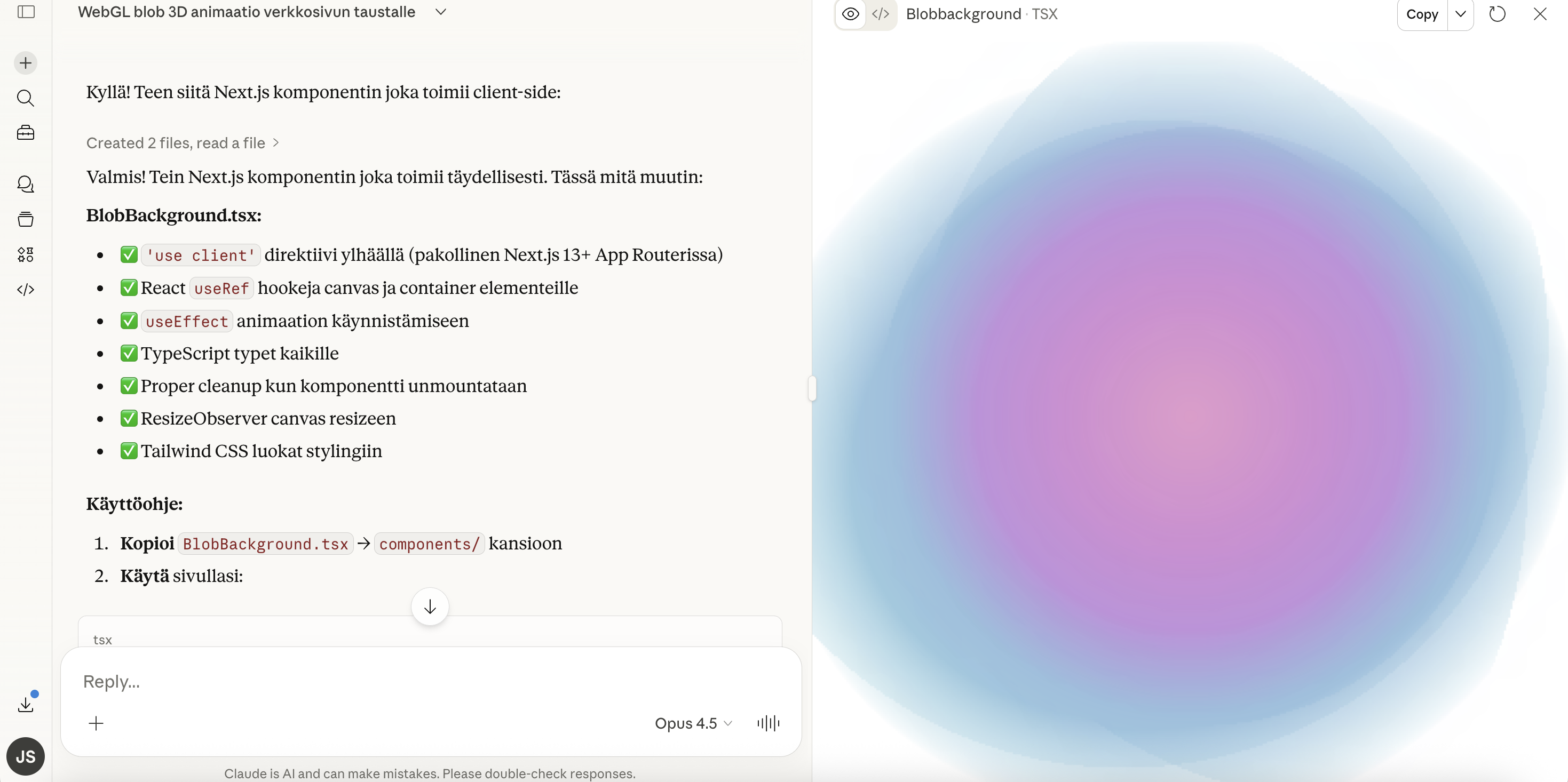
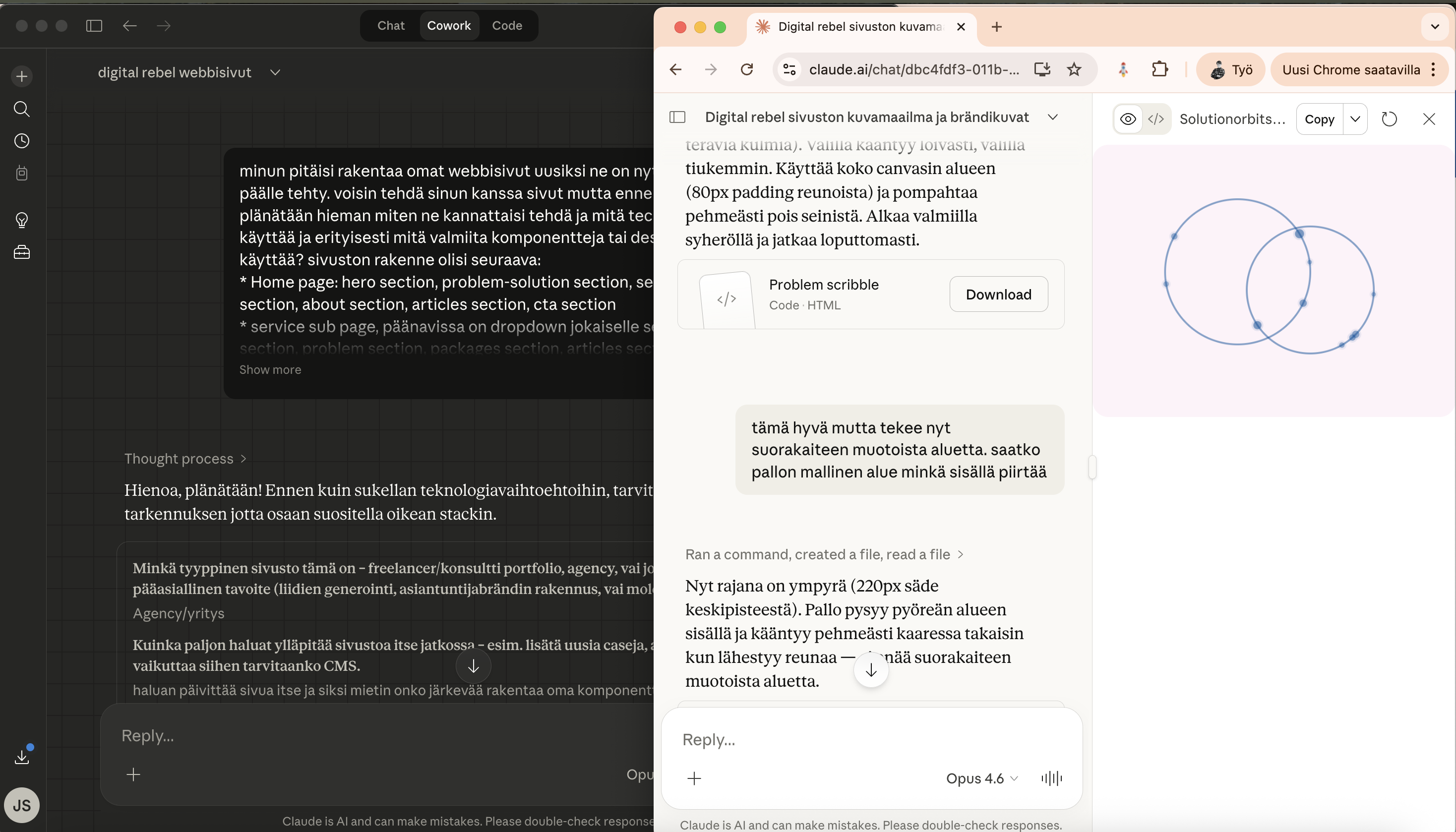
Building the site looked nothing like traditional web development. Most days I had several AI tools open at once:
- Claude Code fixing bugs and writing features
- Claude Cowork helping me plan what to do next
- A separate Claude instance working on animations and the AI portfolio section
- ChatGPT turning my prompts into Midjourney instructions for illustrations and video
While one tool generated images, another was already building the next page section. While Midjourney rendered, I had moved on to the next thing. My job was deciding what to build and whether the output was good enough.
I'd estimate about 3x productivity compared to working alone. The AI did not get everything right first try, but I could iterate much faster and run things in parallel.
Design Approach
Figma for direction, not pixel perfection
I did not follow a typical agency process for the design.
Figma was for exploring the visual direction: colors, typography, mood. I skipped detailed layouts, responsive breakdowns, and handoff specs entirely.
Instead I took the style direction from Figma and went straight to code with Claude Code. Most design decisions happened live in the browser, in conversation with AI.
This works if you have the design background to make decent calls without a spec in front of you. Not every project should be done this way. But for a solo founder building her own site, it was the fastest way to get from an idea to something real.
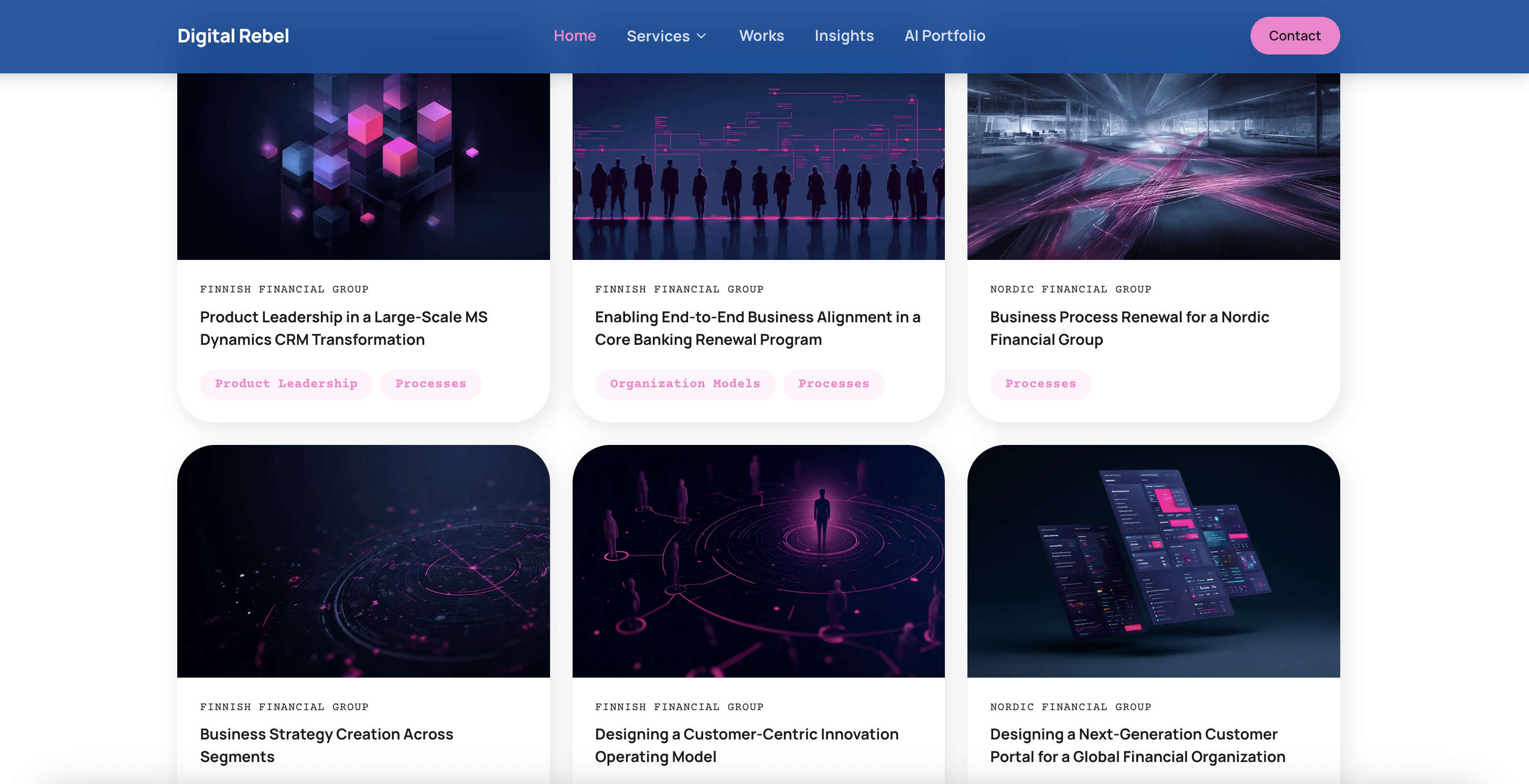
The Result
You're looking at it right now
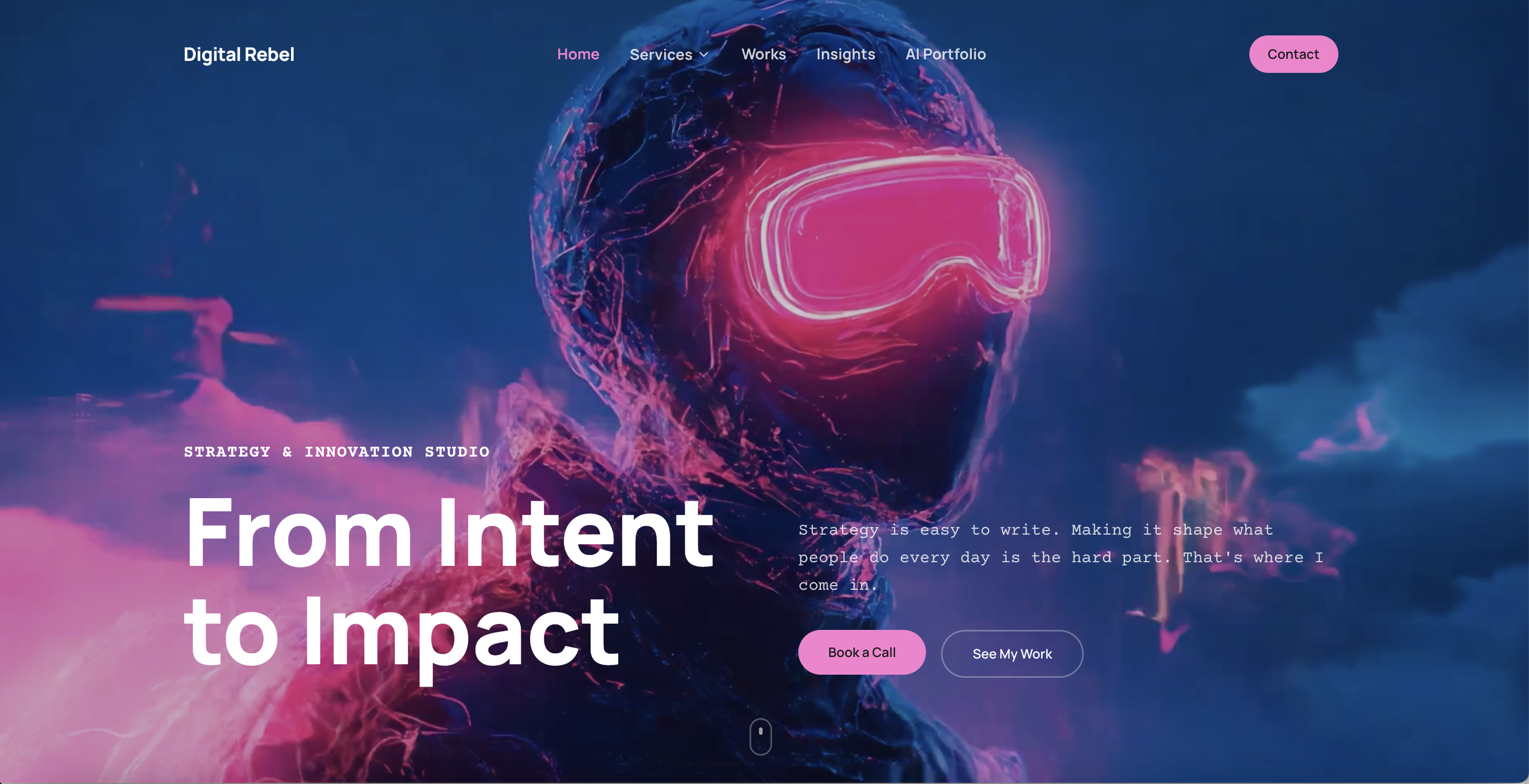
No demo link for this one. No prototype. You are browsing the result right now.
Click around. The hero videos, the interactive portfolio demos, the service pages, the case studies. All of it was built with the workflow I just described.
Building was not the hardest part. It rarely is. The hard part was strategy: figuring out what I am, what I want to do, packaging an offering that actually solves a customer problem, and landing on a core message worth designing around.
I have done this work at strategic, tactical, and operational levels. Led business development, CX, dev teams, designers, QA. I have also been the specialist in the room, doing the strategies, operating models, process maps, and customer journeys myself. Created and validated new business and service concepts from scratch.
Trying to package all of that into one clear offering is genuinely difficult with a wide background. But I think generalist experience is about to matter a lot more as AI changes how organizations actually get work done.
Website Tech Stack
- Next.js — React framework with App Router
- TypeScript — type safety throughout
- Tailwind CSS v4 — utility-first styling
- Framer Motion — animations and transitions
- Vercel — hosting and deployment
- Claude Code — primary development tool
- Claude Cowork — planning and architecture
- ChatGPT + Midjourney — visual asset generation
- Figma — visual direction and identity exploration
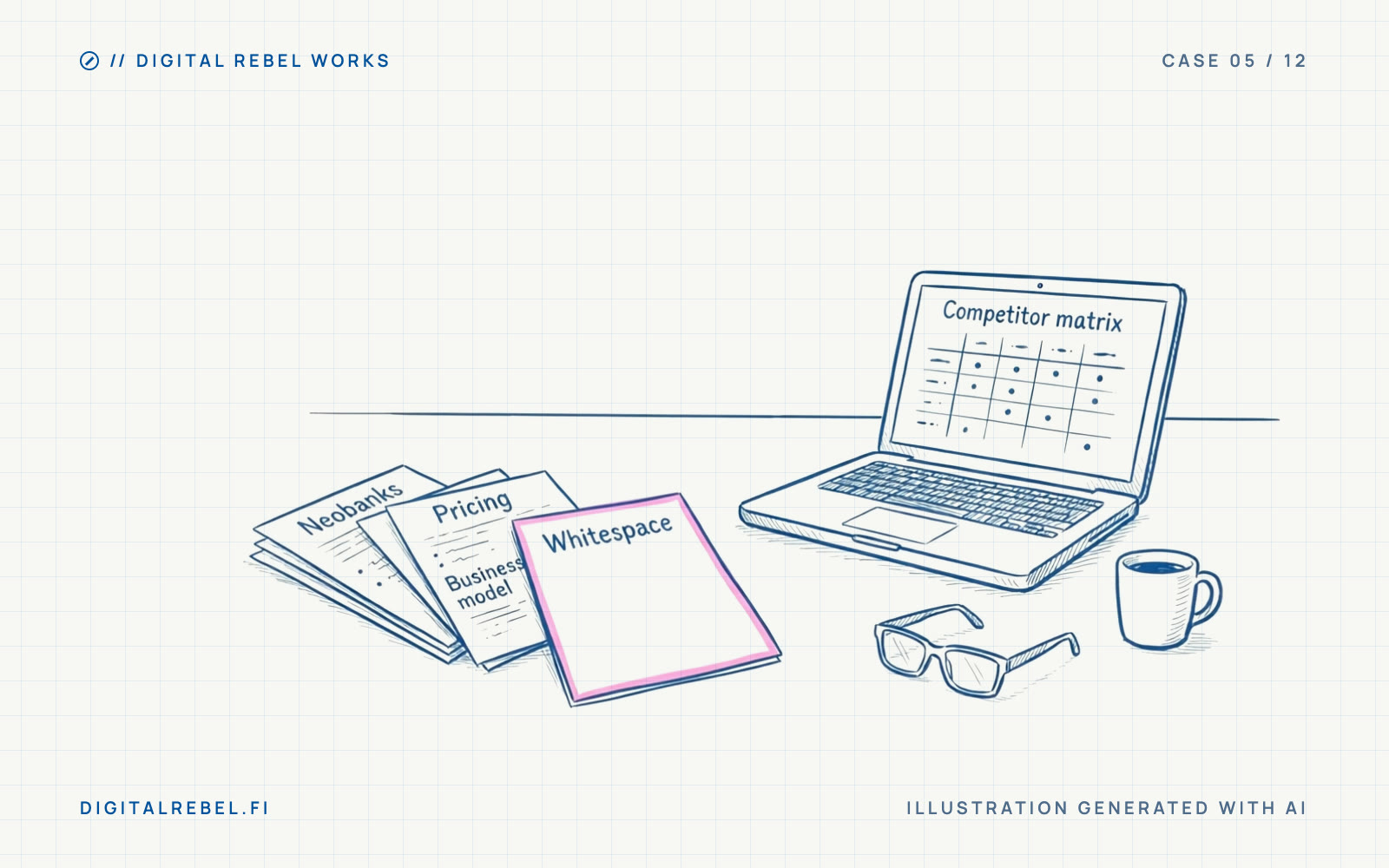
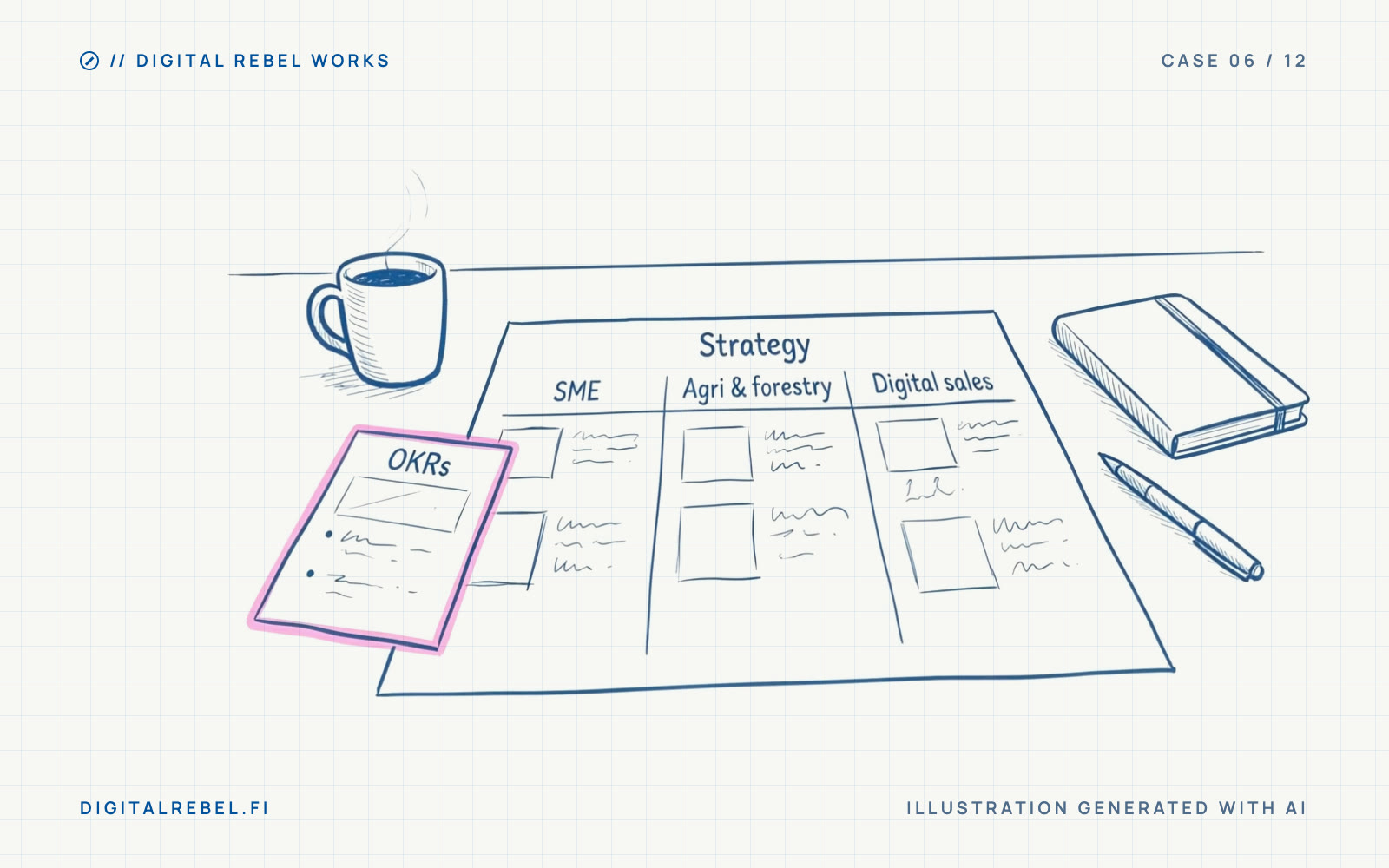
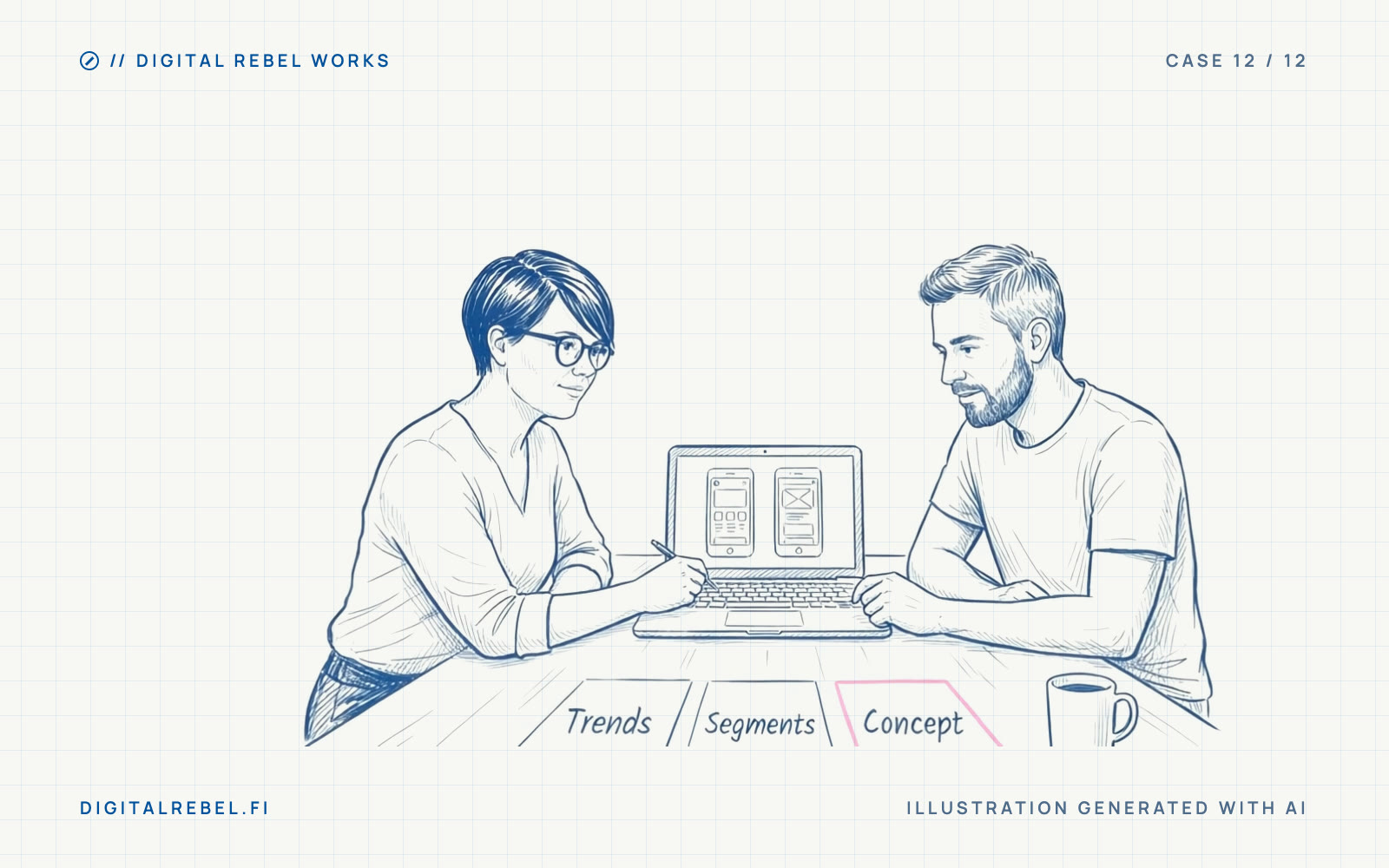
See how this approach plays out in real engagements
Further reading
The Startup That Coded First and Asked Questions Later
A founder called me to make his finished product prettier. The real problem was that nobody had asked the questions that come before the code.
Good Strategy Has Three Parts. Most Have Zero.
Richard Rumelt says a real strategy has a diagnosis, a guiding policy, and a coherent set of actions. Most strategies have none. They have a goal list.
Growth, Growth, Growth — But From Where, Really?
Before you push growth harder, look at how buying actually works from the customer's point of view. Growth doesn't fix friction — it scales it.
Get the next article in your inbox
Short, practical notes on strategy, operating models, and what it takes to turn intent into something that actually works.