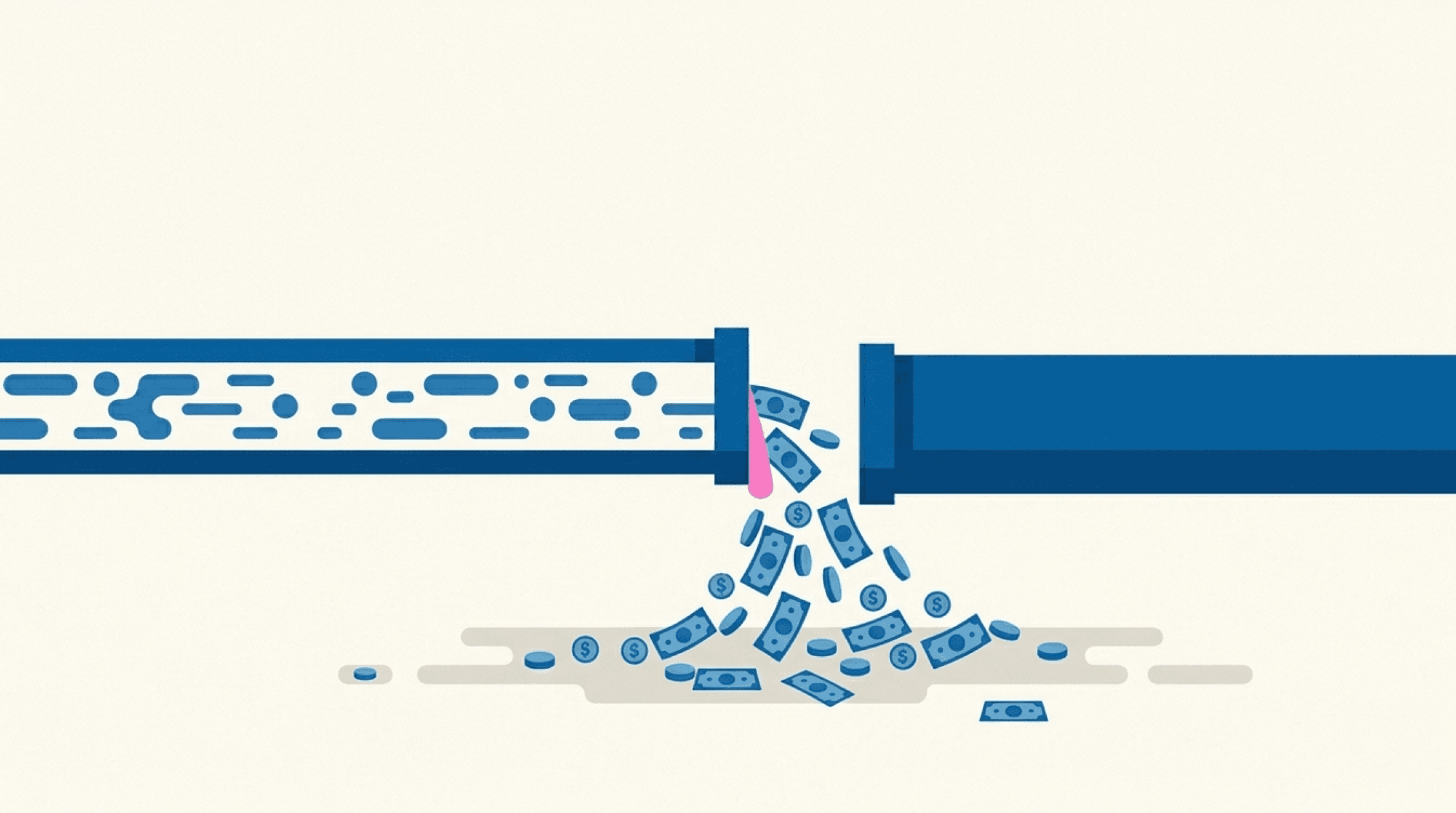
Growth comes up everywhere. In meetings, in strategy decks, in board conversations, with management staring at the sales figures and waiting for them to magically increase.
Growth, growth, growth.
But surprisingly often, nobody really stops to ask the boring but important question first: where does it actually come from, and what needs to be in place before you even chase it?
So… where does growth come from?
Usually it's one of these:
- Selling more of what you already have to your existing customers
- Understanding your current customers better and offering them something new
- Conquering entirely new segments or even whole markets with your current offering
- Gathering customer insight and offering something completely new to new markets
Nothing revolutionary here. Most companies recognize these paths pretty quickly. But this is also where the conversation jumps too fast, straight to growth.
Before you even go there, it's worth looking at how buying works right now from the customer's point of view, not the company's.
And yeah, this is often where things get uncomfortable.
Friction shows up everywhere
A lot of companies are in a situation where buying is difficult, selling is difficult, distribution is difficult, and onboarding is difficult. The whole thing is full of friction.
At every stage there's something slowing things down. Processes aren't truly digital. There's manual work hidden in the background. Stuff moves from one team to another, then another, and sometimes back again before anything really works for the customer.
Internally this can feel normal. For the customer, it feels messy and exhausting. And nothing is transparent on their side either. The poor customer is left out without any status of what's going on.
As a customer, why should I waste my valuable time on anything messy when I have options to choose smoother ones?
Why this keeps happening
Often the real reason is pretty simple: the company hasn't designed its internal processes from the customer's point of view. Oftentimes it isn't even clear who the customer really is. "Everybody is our customer" isn't a useful answer either.
I see it all the time, no matter the size of the company. Things get built around the org chart, and systems, ownership boundaries, and internal logic follow. From the inside that might feel reasonable. From the outside, it just feels like nonsense.
And when things don't make sense to the customer, the experience is anything but smooth.
Scaling this only makes it worse
Before pushing growth harder, make sure things actually work in a customer-centric way.
Because otherwise customer service, and a lot of other functions, will end up completely overloaded when things hit a larger scale.
Growth doesn't fix broken things. It just makes the cracks more visible, and instead of increasing growth you end up increasing costs.
One more thing about growth
All growth is based on customer understanding. And customer understanding is not the same thing as gut feeling.
It's not what someone assumes in a meeting. It's not what feels logical internally. It's not even the HIPPO principle, where the highest-paid person's opinion matters the most.
The origin of money is always the customer, the one who actually buys the product or service.
And yet, an insanely large number of companies still behave as if they were selling to themselves, constantly staring at their own belly button. They build offerings, processes, and experiences that make sense internally, then wonder why growth stalls or why everything feels harder than it should.
If there's one thing worth remembering, it's this: real growth starts when you stop looking inward and start fixing how buying, using, and getting value actually works for the customer.
Growth isn't blocked by lack of ideas. It's blocked by friction customers shouldn't have to deal with.
Fix that, and growth usually follows.
I'm Jenni. Most strategies stay vague, and most AI starts from the tech. I start from where the business actually makes money: mapping where it grows or leaks, designing how it should run, scoring what's worth building, and building the working tools that make it real. Founder of Digital Rebel, a Transformation Studio.