AI Portfolio
AI Marketing & Sales Team
Building my own AI go-to-market team
The Problem
Solopreneur math doesn't add up
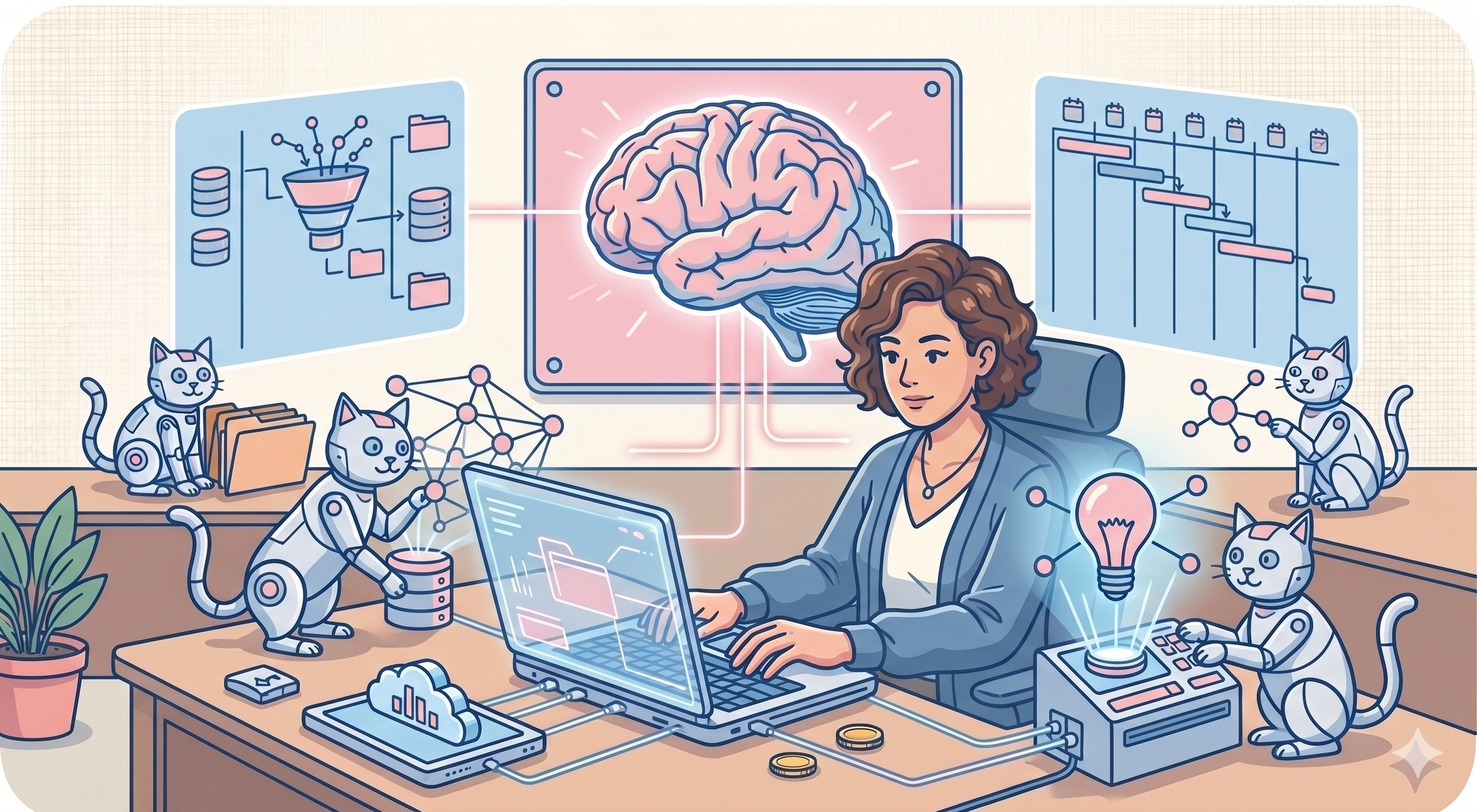
Here's the thing about running a one-person shop: the math doesn't work.
When I'm on a client project, I'm on it. I can keep posting on social for two, maybe three weeks. After that, sales stuff just stops happening. There's no time. The client always wins.
It all feels fine until the project ends. Then I look up and my channels have gone quiet, the pipeline is empty, and I'm starting from zero. My projects tend to be long, so by the time one wraps up, the silence has been piling up for months.
So the problem isn't "can AI help me write posts." It's that delivery and pipeline can't both run on one calendar, and I kept falling off the same cliff every time a project ended.
The Goal
AI runs the go-to-market, I approve and decide
What I actually want is an AI team that does most of the work.
Marketing, social, content, outbound, follow-up, qualification. All of it running while I'm deep in a client project. Then when a prospect shows up on my calendar, everything before the meeting is already done.
My job shrinks to two things: approving what goes out, and deciding where we're pointing. Taste, tone, which deals to chase. Everything else runs without me in the middle.
That's where I'm trying to get. The rest of this page is an honest look at how far I actually am.

The Team
Agents, not tools
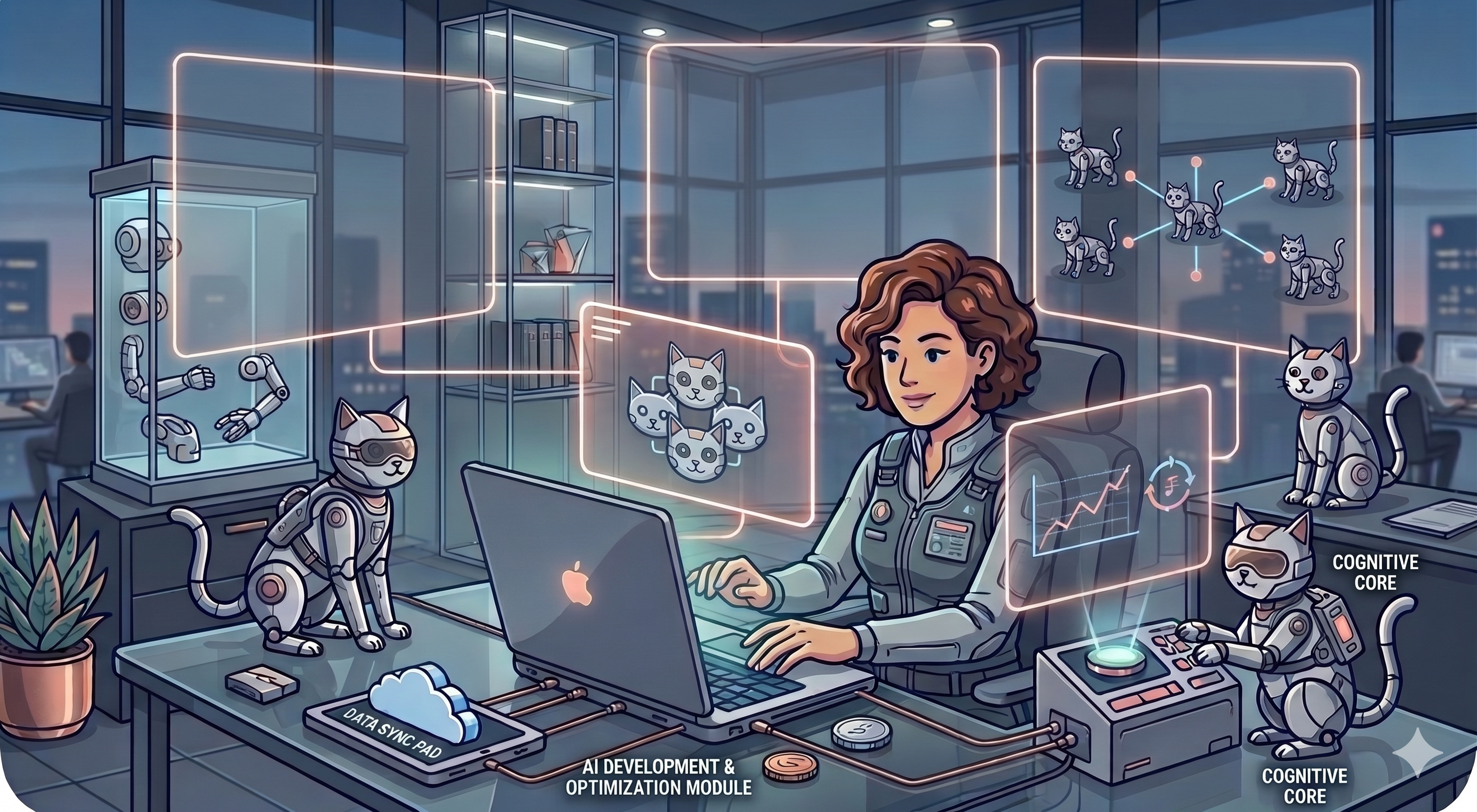
I set this up the way I'd set up a real team. Actual roles, not a pile of tools. Who owns what, who hands off to whom, who gets the final call.
The diagram is a snapshot. I sit at the top as the only human on the chart, setting direction and approving what goes out. Below me is the context layer in Notion — a growing library of files covering strategy, brand voice, ICP, content pillars, patterns, and the latest performance data. Every agent reads the relevant pieces before doing anything, which is how the system stays consistent without me briefing it every time.
**Weekly Pulse** closes the loop. It pulls LinkedIn and GA4 data weekly, writes it back into the context layer, and the next batch of content knows what worked.
From there it splits into two pipelines.
**Content production** drafts LinkedIn posts and blog articles. Content Refinery does the writing and Imagen 4 generates the cover images. Humanizer is paused — the Brand Voice page now overrides it.
**Prospecting** is paused. The solopreneur version was working end-to-end — and instead of shipping it I started designing a corporate-tier factory: bigger ICP coverage, more automation, every edge case. Way more than the scale of my business actually needs. Classic over-engineering. The reset is to remember keep it simple, stupid — ship the small version, expand only when there's a real reason to.
> **Note on what's not here:** strategy and positioning sit one level up. That's part of how I run client work and my own product thinking. It feeds into the context layer above, but it's not part of this GTM team. This page is about the marketing and sales machine.
Where I Am Now
What's live, what's next
Honest status. No point pretending on my own site.
Live and running
- **Weekly Content Batch.** Every Wednesday 9am, the content agents draft 3 LinkedIn posts and 1 blog article with cover image. I review and approve.
- **Weekly Pulse.** Every Monday 8am, LinkedIn and GA4 data flows into the context layer so the agents learn what's working.
- **Context layer in Notion (Context Library):** 10+ active entries covering strategic focus, brand voice, pillar strategy, ICP targets, content patterns, pulse data, bio signature, brand colors, and more. Agents read the relevant ones before producing.
- **Blog infrastructure:** Next.js + MDX, 5 pillar hubs (3 live), automated related-articles, BioCard, MailerLite newsletter signup, content dashboard.
- **14 blog articles published**, 4 pillar pages live.
Related thinking from real engagements



Further reading
Growth, Growth, Growth — But From Where, Really?
Before you push growth harder, look at how buying actually works from the customer's point of view. Growth doesn't fix friction — it scales it.
The Bottleneck Isn't Building. It's Deciding.
AI made execution fast. But approval still runs on slide decks and steering groups. The bottleneck in product development isn't technical — it's organizational.
Customer Experience Has to Be Led, Not Just Talked About
CX is cross-functional by nature, but almost nobody has the authority to lead it that way. That's why the experience customers get rarely matches the ambition.
Get the next article in your inbox
Short, practical notes on strategy execution, operating models, and the structures that decide whether a transformation actually changes how teams work.