AI Portfolio
Claim Handling Transformation
Core system and business renewal
Project Northstar
Reinventing an Internal Claims Platform
Based on a true story.
Names and identifying details have been changed to protect the privacy of those involved. Any resemblance to actual companies, legacy systems or heroic transformation programs is purely coincidental. No core systems were harmed in the making of this prototype.
Somewhere inside a large financial organization, someone said the familiar sentence: "We need to renew the core system." On paper it looked like a technical replacement project, but in reality it was a business transformation. The internal claims platform supported multiple business units and customer segments, meaning the renewal touched customer journeys, operating models, cross-functional processes and the daily work of several teams.
Core system renewals rarely change only technology — they change how the business actually runs.
Explore the prototype below — a reimagined claims handling workspace with queue management, AI-assisted processing and real-time SLA tracking.
Starting from business capabilities
Outcomes before features
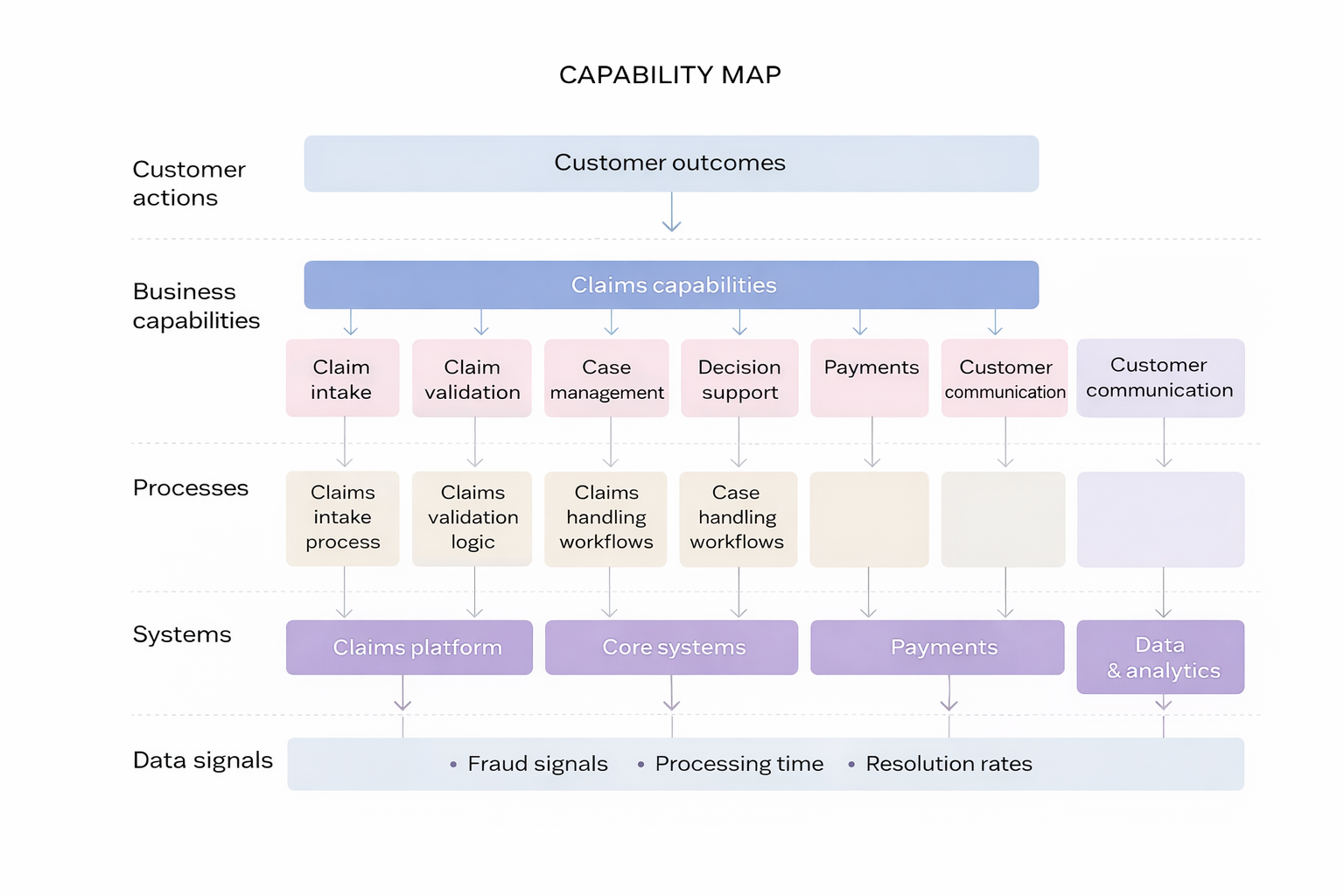
Instead of starting with system features, the work focused on defining business capabilities and measurable outcomes. The objectives were clear: improve efficiency, reduce operational costs, and create smoother experiences for both customers and employees while enabling faster sales, delivery and onboarding.
End-to-end processes were mapped, customer journeys redesigned and operating models clarified so the new platform would support the way the business actually needed to work.
From transformation to execution
Making transformation decisions concrete
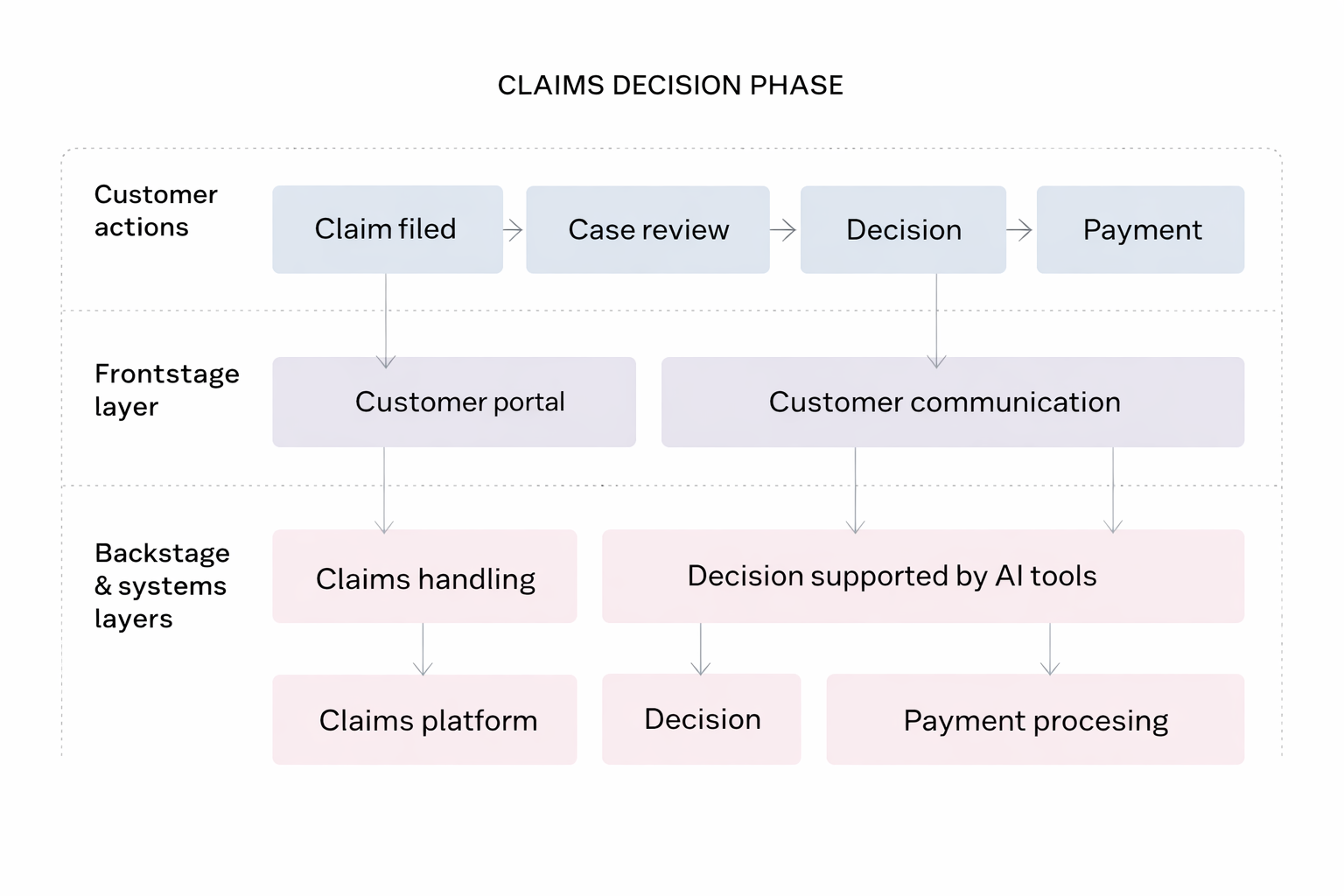
Service blueprints, process models and prototypes were used to align stakeholders and make transformation decisions concrete across business and technology. A platform like this needs to support multiple internal user groups — from claims handlers and sales teams to back-office specialists — each with different workflows and incentives.
This prototype draws from real experience across multiple core system renewals and business transformation programs — from shaping strategic direction and redesigning end-to-end processes to translating business goals into system-supported capabilities.
Because the real success metric of a core renewal is not whether the system works — it is whether the business works better because of it.
Demo Tech Stack
- HTML5 — single-page application, everything in one index.html file
- CSS3 — embedded styles with CSS custom properties, grid/flexbox layouts, keyframe animations
- Vanilla JavaScript — no frameworks, plain DOM manipulation for navigation, search, dynamic content rendering
- Google Material Icons — icon font from Google Fonts CDN
- Roboto & Roboto Mono — typography from Google Fonts CDN
- Angular Material design system — visual styling only
A friendly reality check
What you're looking at is an AI-generated prototype — a fast proof of concept to explore ideas and demonstrate what modern AI tools can do.
But a prototype is not a product. Building the real thing requires clear business goals, processes, customer journeys, solid business logic, defined user needs, and hundreds of decisions no AI can make for you (yet).
So don't ship a prototype and call it done. Define proper strategy, design, and get someone who knows the difference between “looks impressive” and “actually works and creates value for both customer and business.”
Might we suggest Digital Rebel? We hear they're quite good at that.
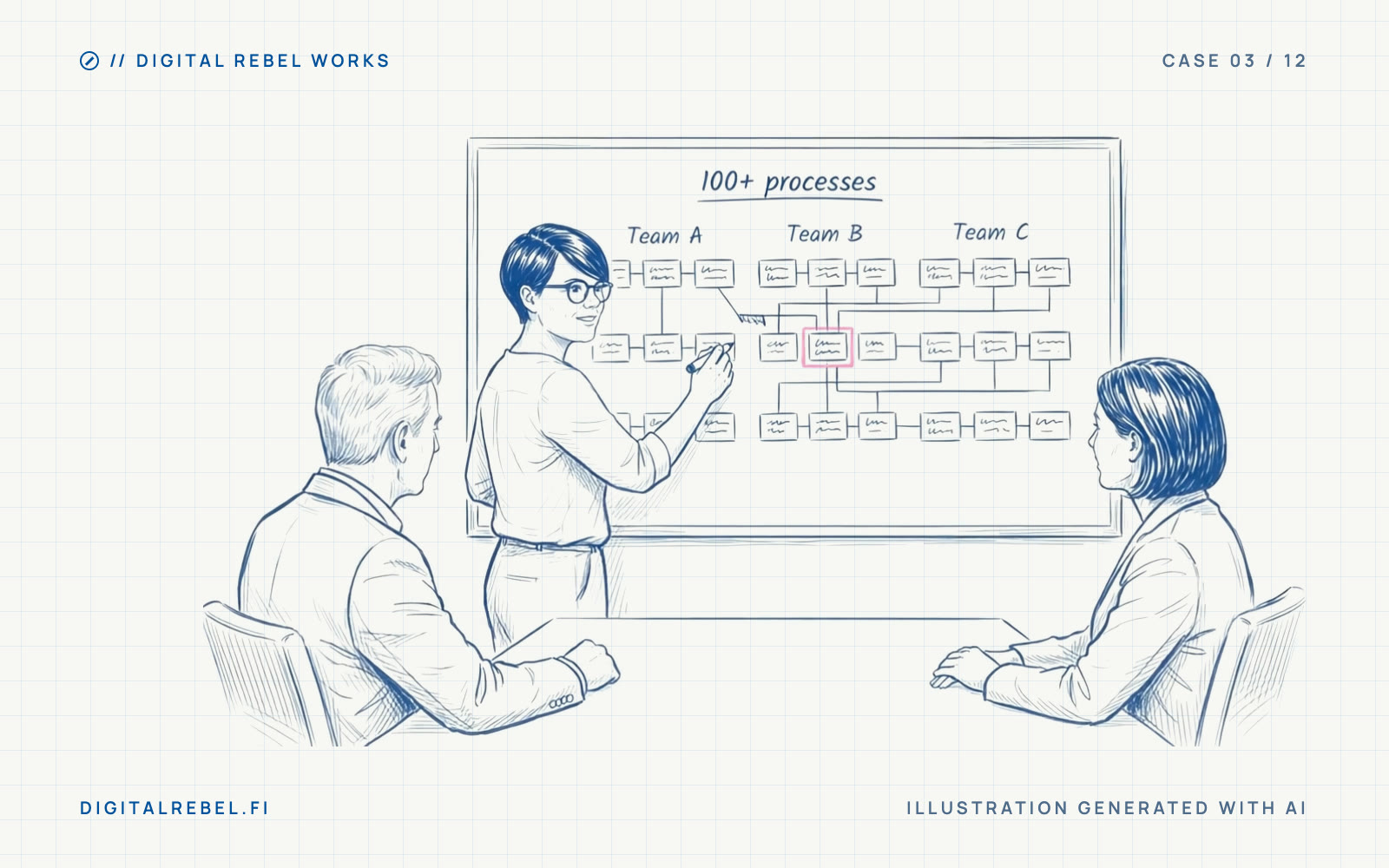
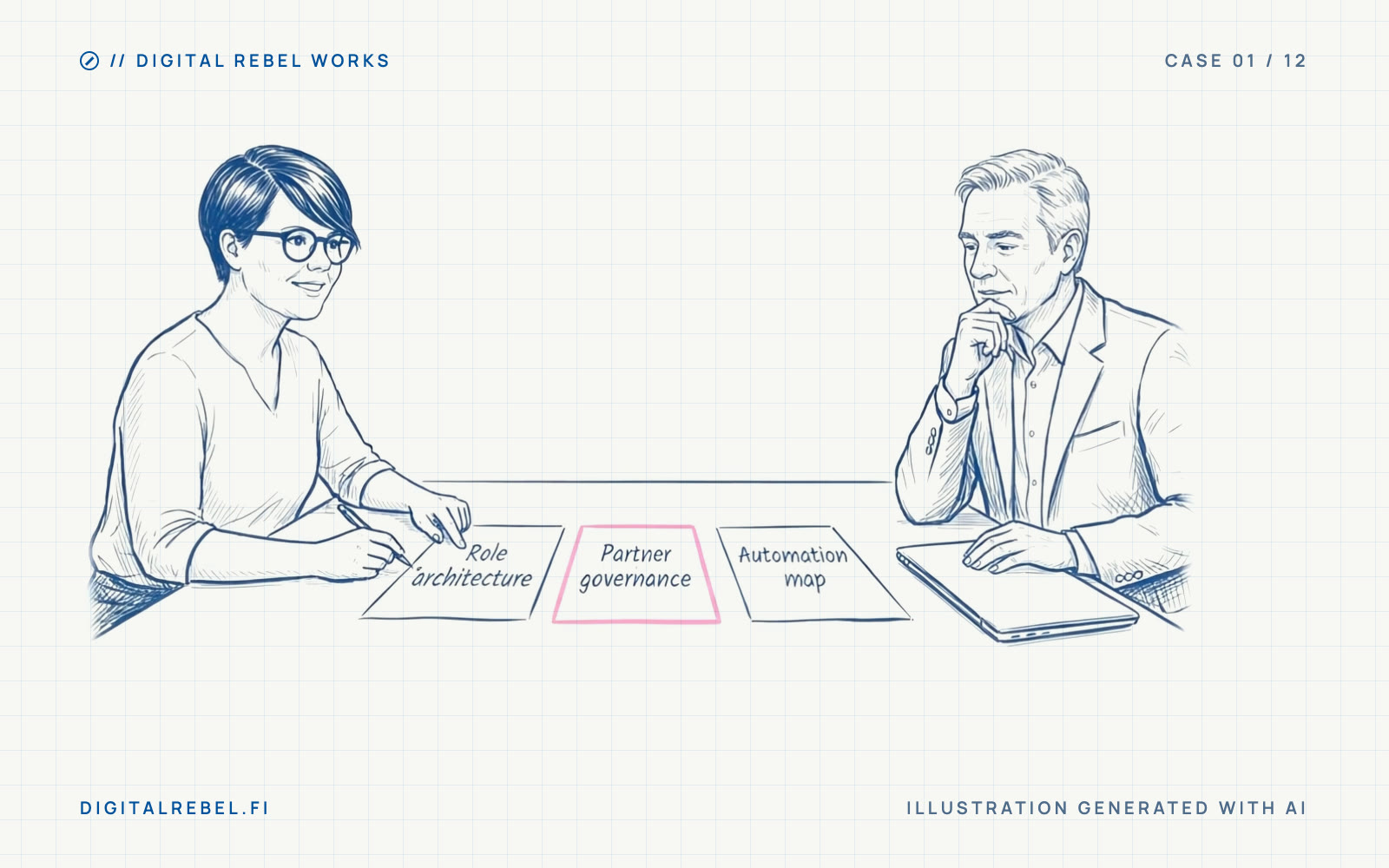
How this plays out in real engagements
Further reading
Your Operating Model Is Either Enabling or Killing Your Strategy
Most strategies aren't strategies. The ones that are still fail, because nobody changed the structure underneath. Operating models are the missing layer.
Fixing Your Product Operating Model Might Break Everything Else
What happens when product speeds up and nothing else does? Introducing SBOM, the Systemic Business Operating Model that keeps the organization moving.
Good Strategy Has Three Parts. Most Have Zero.
Richard Rumelt says a real strategy has a diagnosis, a guiding policy, and a coherent set of actions. Most strategies have none. They have a goal list.
Get the next article in your inbox
Short, practical notes on strategy, operating models, and what it takes to turn intent into something that actually works.