AI Portfolio
Piggy Bank Mobile
Mobile Bank Demo
The Challenge
A mobile experience worth talking about
Based on a true story.
Names and identifying details have been changed to protect the privacy of those involved. Any resemblance to actual companies, living or bankrupt, is purely coincidental. No NDAs were harmed in the making of this prototype.
Somewhere in the Nordics, a financial institution realized something uncomfortable.
They did not have a mobile bank experience worth talking about. In fact, they did not really have one at all.
Customers managed their finances through fragmented channels, legacy systems and workarounds. The organization had strong products, but no coherent mobile experience tying them together.
So instead of redesigning screens, we started with a more fundamental question:
If we built a mobile bank from scratch today, what problem would it actually solve in people's lives?
Try the demo yourself and click on it!
- Login
- Home > Analytics > Monthly & Yearly
- Loans > Morgage > Action buttons
- Wealth > Investment Portfolios
- Insurance
- Support
- Profile icon up right corner > Log out
The Challenge
A mobile experience worth talking about
Based on a true story.
Names and identifying details have been changed to protect the privacy of those involved. Any resemblance to actual companies, living or bankrupt, is purely coincidental. No NDAs were harmed in the making of this prototype.
Somewhere in the Nordics, a financial institution realized something uncomfortable.
They did not have a mobile bank experience worth talking about. In fact, they did not really have one at all.
Customers managed their finances through fragmented channels, legacy systems and workarounds. The organization had strong products, but no coherent mobile experience tying them together.
So instead of redesigning screens, we started with a more fundamental question:
If we built a mobile bank from scratch today, what problem would it actually solve in people's lives?
Try the demo yourself and click on it!
- Login
- Home > Analytics > Monthly & Yearly
- Loans > Morgage > Action buttons
- Wealth > Investment Portfolios
- Insurance
- Support
- Profile icon up right corner > Log out
Research
Starting with life, not features
Before a single line of code was written, we explored customer needs through interviews and research.
We created an extended "day in the life" narrative — not just a single day, but a longer financial journey capturing moments of stress, ambition, uncertainty and small wins. We mapped emotional curves alongside financial behavior to understand when guidance, automation or reassurance mattered most.
From there, we built:
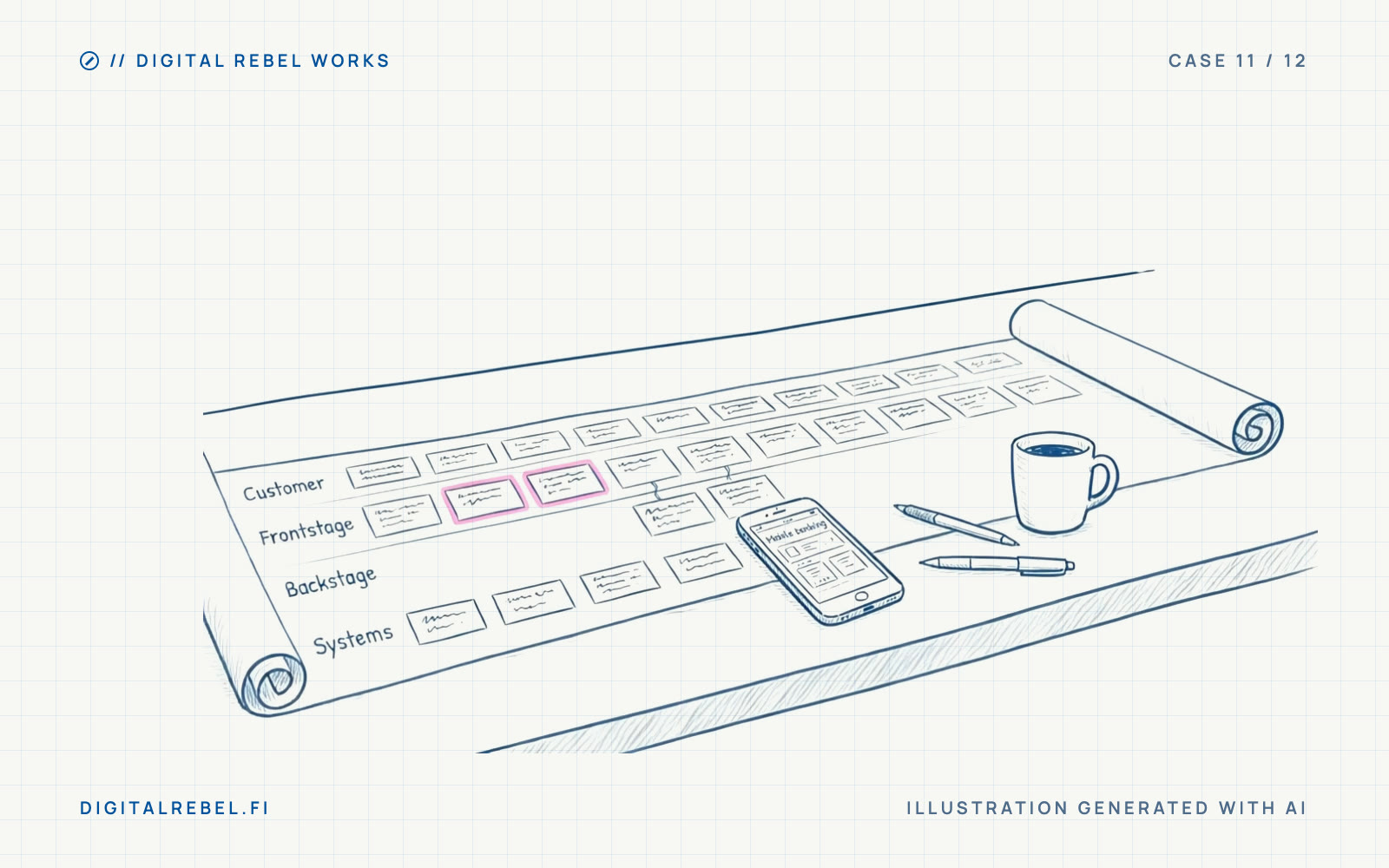
- Service blueprints to connect frontstage experience with backend reality
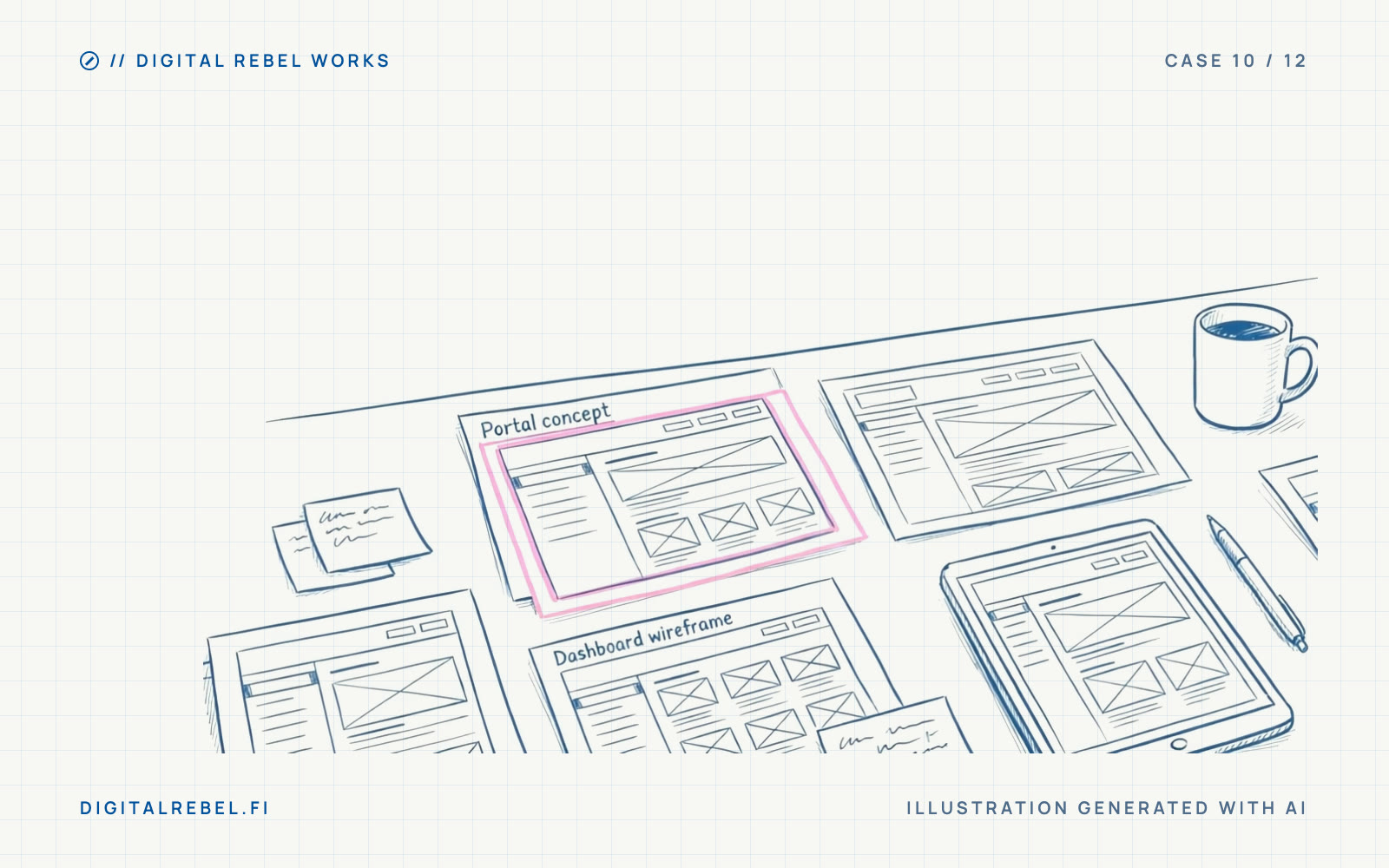
- Early prototypes to make ideas tangible
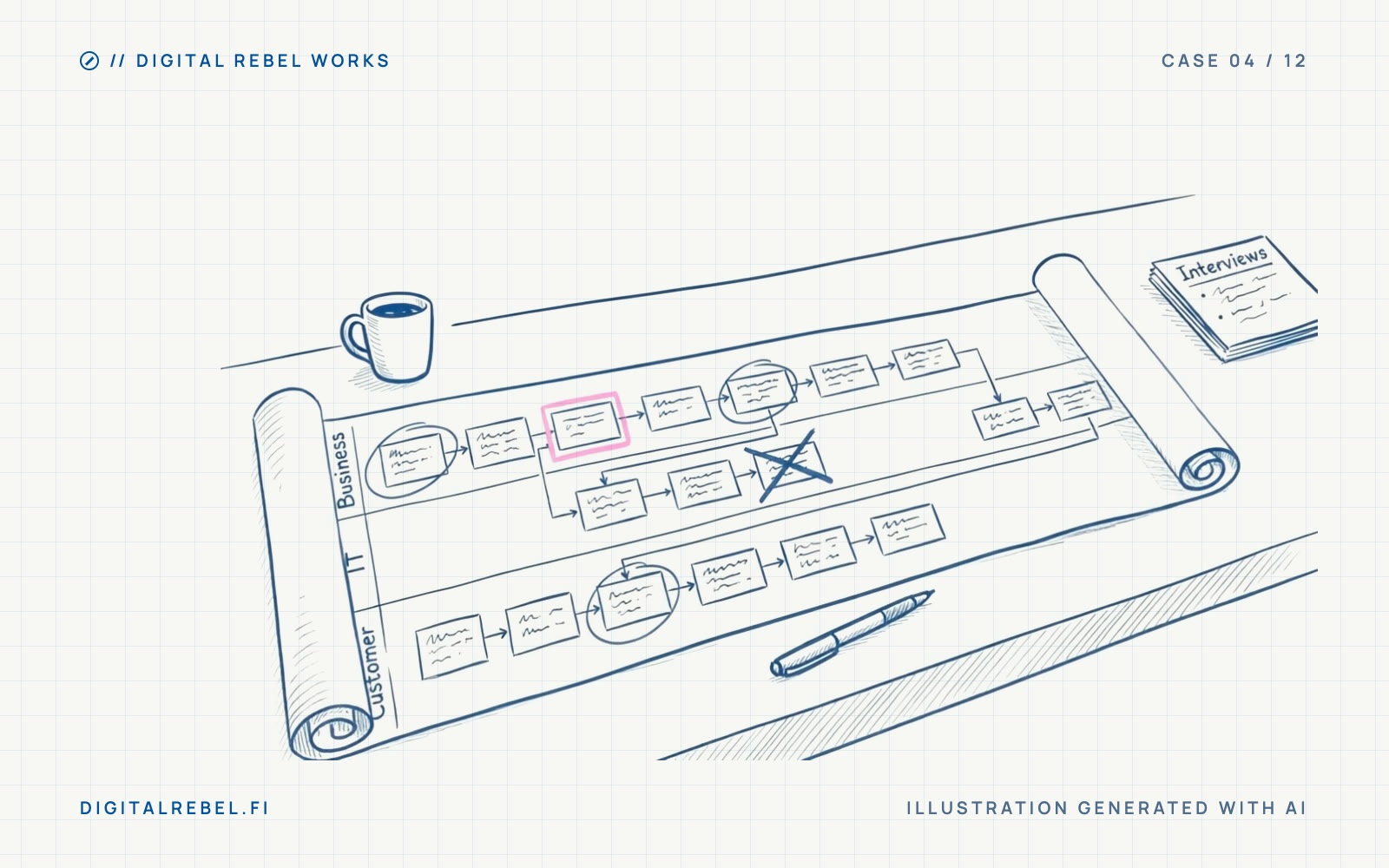
- Structured customer interviews to validate real needs before technical commitment
The goal was simple: do not build anything that had not been tested against real human behavior.
Design
Prototypes as alignment tools
Prototypes served two purposes.
Externally, they helped validate whether customers actually needed and understood the proposed concepts.
Internally, they became alignment tools. Instead of abstract strategy decks, stakeholders could see and react to something concrete. Trade-offs became clearer. Business priorities surfaced faster. Assumptions were challenged earlier.
Business viability was considered alongside desirability from the beginning. This was not a design exercise. It was a product strategy exercise grounded in customer reality.
Development
From validation to build
Only after validation did technical work begin.
During implementation, we defined:
- The data points to be collected
- Behavioral signals to monitor
- Success metrics tied to real customer outcomes
Usage analytics were not an afterthought. They were designed into the product from the start.
Post-launch, customer feedback and usage data fed continuous development. Features were iterated based on evidence, not internal opinion.
The Result
What this prototype represents
Piggy Bank is a playful surface for a serious approach:
- Discovery before delivery
- Alignment before scale
- Data-informed iteration after launch
- Continuous development as default
It demonstrates how a mobile banking experience can be designed end-to-end — from life context to validated, measurable product.
Demo Tech Stack
- React 19 — UI framework
- TypeScript — type safety
- Vite 7 — build tool & dev server
- Ant Design 6.3 — UI component library
- @ant-design/icons — icon set
- Recharts — charts & data visualization (AreaChart, LineChart, PieChart)
- CSS — custom styling with iPhone frame simulation
A friendly reality check
What you're looking at is an AI-generated prototype — a fast proof of concept to explore ideas and demonstrate what modern AI tools can do.
But a prototype is not a product. Building the real thing requires clear business goals, processes, customer journeys, solid business logic, defined user needs, and hundreds of decisions no AI can make for you (yet).
So don't ship a prototype and call it done. Define proper strategy, design, and get someone who knows the difference between “looks impressive” and “actually works and creates value for both customer and business.”
Might we suggest Digital Rebel? We hear they're quite good at that.
See how this approach plays out in real engagements
Further reading
What Concept Design Actually Is (And Why Most Companies Skip It)
In many companies, work moves from strategy straight to UI or data models. The layer in between — the one that defines the big picture — gets skipped.
The Startup That Coded First and Asked Questions Later
A founder called me to make his finished product prettier. The real problem was that nobody had asked the questions that come before the code.
Growth, Growth, Growth — But From Where, Really?
Before you push growth harder, look at how buying actually works from the customer's point of view. Growth doesn't fix friction — it scales it.
Get the next article in your inbox
Short, practical notes on strategy, operating models, and what it takes to turn intent into something that actually works.